

Taxi Booking App Development: How to Build an App Like Uber
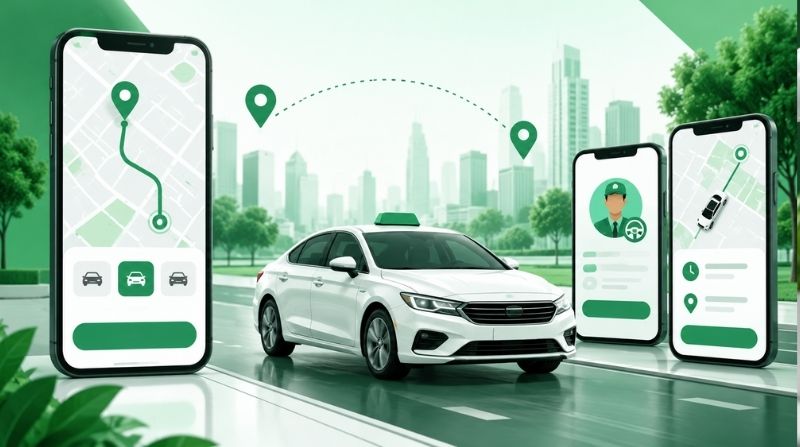
Learn how taxi booking app development works, including Uber-like features, cost, technology, development process, and launch.
Taxi booking apps have transformed the way people find and use transportation. Instead of calling a taxi service or waiting at a designated pickup point, passengers can use a smartphone to request a ride, see nearby drivers, track their journey, and pay digitally.
The success of platforms such as Uber has also created opportunities for businesses to develop their own ride-hailing applications. However, building an app like Uber requires much more than creating a simple booking interface. A complete taxi platform needs passenger and driver applications, an administration dashboard, real-time location tracking, payment processing, ride management, notifications, secure APIs, and a scalable backend.
For businesses exploring taxi booking app development, understanding these components before development begins can help define the right product scope, technology architecture, budget, and launch strategy.
This guide explains how to build an app like Uber, the essential features to include, the technology involved, development costs, timelines, security considerations, and the steps involved in taking a taxi booking platform from an idea to a working product.
What Is Taxi Booking App Development?
Taxi booking app development is the process of creating software that connects passengers looking for transportation with drivers who can provide the requested service.
A complete taxi booking ecosystem typically consists of three major components:
A passenger mobile application
A driver mobile application
An admin or management dashboard
These components communicate with a central backend that manages users, bookings, driver availability, locations, pricing, payments, notifications, and other business operations.
The passenger uses the application to enter a pickup location, choose a destination, select a ride category, view an estimated fare, request a ride, track the driver, and complete payment.
The driver uses a separate application to manage availability, receive ride requests, navigate to passengers, update trip status, and monitor earnings.
The administrator manages the entire platform through a centralized dashboard.
This architecture makes a taxi booking application fundamentally different from a basic mobile application. It is a connected software ecosystem that depends on real-time data and communication between multiple systems.
How to Build an App Like Uber
The process of building an Uber-like taxi booking application should begin with business and product planning rather than coding.
A typical development process involves several stages.
1. Define the Business Model
Before development starts, determine how the platform will operate and generate revenue.
Possible business models include:
Commission charged on completed rides
Booking or service fees
Driver subscription plans
Corporate transportation accounts
Premium transportation services
Scheduled transportation
Fleet-based transportation
Partnerships with businesses
You should also determine the target market, vehicle categories, pricing model, driver onboarding process, cancellation rules, payment methods, and customer support structure.
These decisions directly influence the application's functionality and technical requirements.
For example, an application designed for a single-city taxi service may require a simpler architecture than a platform intended to operate across multiple cities or countries.
2. Identify the User Roles
A successful taxi booking platform needs clearly defined user roles.
Passengers need functionality that allows them to:
Register and log in
Manage their profiles
Select pickup and destination locations
Request rides
Choose vehicle categories
View estimated fares
Track drivers
Make payments
View trip history
Rate drivers
Contact support
Drivers require a different set of capabilities, including:
Registration and verification
Vehicle information
Availability management
Ride request notifications
Ride acceptance
Navigation
Passenger information
Trip status updates
Earnings tracking
Trip history
Ratings
Driver support
Administrators need tools to manage the entire platform, including users, drivers, vehicles, rides, payments, pricing, reports, and support requests.
Defining these roles at the beginning helps developers create the correct permissions, workflows, and application architecture.
3. Plan the User Experience
A taxi application should make booking a ride as simple as possible.
The passenger journey should ideally involve only a few clear steps:
Open the application.
Select the pickup location.
Enter the destination.
Choose the preferred ride type.
Review the estimated fare.
Confirm the booking.
Track the driver.
Complete the ride and payment.
Rate the experience.
The driver journey should also be designed around simplicity. Drivers need access to essential information while minimizing unnecessary interaction with the application during a trip.
Important UX considerations include clear navigation, readable information, simple booking flows, accurate location displays, visible ride status, straightforward payment screens, and accessible controls.
A strong user experience can directly affect booking completion, customer retention, driver efficiency, and overall satisfaction.
For businesses planning the design and development of their passenger and driver applications, mobile app development is a fundamental part of building the complete taxi platform.
Develop the Passenger App
The passenger application is the primary customer-facing component of a taxi booking platform.
The core passenger experience should allow users to book and manage rides without unnecessary complexity.
Important passenger features include:
Account registration and login
Profile management
GPS-based location detection
Pickup and destination selection
Fare estimation
Vehicle category selection
Ride booking
Driver information
Real-time driver tracking
Estimated arrival time
Ride status updates
Digital payment
Ride history
Ratings and reviews
Push notifications
Customer support
Advanced functionality can include scheduled rides, saved addresses, referral programs, promotional codes, loyalty programs, multiple payment methods, and ride sharing.
The exact feature set should be based on the target market and business model rather than attempting to replicate every feature of a large platform from the beginning.
Develop the Driver App
The driver application is equally important because it connects available drivers with passengers who need transportation.
A typical driver application includes:
Driver registration
Identity verification
Document submission
Vehicle information
Availability status
Incoming ride requests
Ride acceptance or rejection
Passenger information
Navigation
Pickup and drop-off details
Trip status management
Earnings
Ride history
Ratings
Notifications
Driver support
The driver application should provide relevant information quickly and clearly.
For example, a driver receiving a ride request should be able to understand the pickup location, estimated distance, and relevant ride information without navigating through several screens.
Build the Admin Dashboard
The admin dashboard provides centralized control over the taxi booking platform.
Administrators may need to manage:
Passengers
Drivers
Vehicles
Active rides
Completed rides
Payments
Pricing
Promotions
Driver verification
Customer support
Ratings and reviews
Reports
Analytics
The dashboard can also provide real-time visibility into ongoing trips and driver activity.
For larger transportation businesses, administrative functionality becomes increasingly important because managing thousands of rides manually is not practical.
DEIN IT TEAM's taxi booking solution includes an administration system designed to provide visibility into users, drivers, rides, earnings, and analytics.
Essential Features of a Taxi Booking App
A basic booking function is only one part of the overall application.
Real-Time GPS Tracking
Real-time GPS tracking allows passengers to see the location of their assigned driver and monitor the progress of their journey.
For the business, location data can support driver dispatching, fleet management, trip monitoring, and operational analytics.
GPS functionality can also help provide estimated arrival times and improve the overall booking experience.
Ride Matching
The platform needs a mechanism for matching passengers with available drivers.
The matching system can consider factors such as:
Driver location
Driver availability
Vehicle type
Passenger requirements
Estimated arrival time
Current trip status
Business rules
An efficient matching system can reduce passenger waiting times while improving driver utilization.
In-App Payments
Digital payments eliminate the need for passengers to rely exclusively on cash.
Depending on the target market, an application may support:
Credit and debit cards
Digital wallets
In-app wallets
Multiple payment gateways
Promotional credits
Corporate payment options
Payment functionality should be designed with transaction reliability, refunds, authentication, and applicable security requirements in mind.
Ride Scheduling
Passengers may want to book transportation in advance rather than request a vehicle immediately.
Scheduled rides can be particularly useful for airport transportation, business travel, appointments, and planned journeys.
The system needs to manage scheduled bookings, driver availability, reminders, and notifications.
Ratings and Reviews
Ratings provide feedback about the passenger and driver experience.
Businesses can use this information to identify service issues, monitor driver performance, and improve customer satisfaction.
Push Notifications
Notifications keep users informed throughout the ride.
Examples include:
Booking confirmation
Driver assignment
Driver arrival
Trip start
Trip completion
Payment confirmation
Scheduled ride reminders
Promotional messages
Notifications should provide useful information without overwhelming users.
Advanced Features for an Uber-Like App
Once the core platform is operational, businesses can introduce advanced functionality to improve efficiency and differentiate their service.
AI-Based Route Optimization
Artificial intelligence can be used to analyze traffic, location, and route information to identify potentially more efficient routes.
For a ride-hailing platform, intelligent routing can help reduce travel times and improve fleet utilization.
DEIN IT TEAM's taxi booking solution includes AI-based route optimization capabilities for analyzing real-time traffic information and helping drivers identify suitable routes.
Dynamic Pricing
Ride demand can change significantly depending on time, location, weather, events, and driver availability.
Dynamic pricing allows the platform to adjust fares according to predefined business rules.
However, pricing changes should be transparent. Unexpected pricing can damage user trust, so businesses should clearly communicate fare calculations where appropriate.
Multi-Language Support
If the platform is intended for multiple regions, supporting multiple languages can make the application more accessible.
Language architecture should be planned during development rather than treated as a late-stage addition.
Multi-Currency Support
International platforms may also need to support multiple currencies.
This requires appropriate handling of exchange rates, payment processing, invoices, refunds, and financial reporting.
Advanced Analytics
Analytics can help transportation businesses understand how their platform is performing.
Useful metrics include:
Number of bookings
Completed rides
Cancellation rates
Average waiting time
Driver utilization
Customer retention
Revenue per ride
Peak demand periods
Geographic demand
Payment failures
These insights can support decisions related to pricing, driver supply, marketing, and expansion.
Why APIs Matter in Taxi Booking App Development
A modern taxi application depends on communication between multiple systems.
The platform may need to integrate with:
Mapping services
Navigation platforms
Payment gateways
SMS providers
Push notification services
Identity verification systems
CRM platforms
Analytics systems
Fleet management software
APIs make this communication possible.
For example, when a passenger enters a destination, a mapping API can provide route and distance information. A payment API can process the fare after a trip, while an SMS or notification service can send booking updates.
This makes API architecture a critical part of taxi booking app development.
Businesses planning complex integrations can also consider API development and integration as part of the broader technology architecture.
Choosing the Right Technology Stack
There is no single technology stack that is best for every taxi booking application.
The technology should be selected according to the application's requirements, expected user volume, performance needs, integrations, budget, and long-term maintenance strategy.
A typical platform may require technologies for:
Mobile applications
Backend services
Databases
APIs
Real-time communication
Cloud infrastructure
Authentication
Payments
Maps and navigation
Notifications
Analytics
Monitoring
Businesses can choose native development for iOS and Android or use cross-platform technologies where appropriate.
The backend architecture should also be designed for scalability. A small MVP may require a relatively straightforward architecture, while a multi-city ride-hailing platform may need more sophisticated infrastructure capable of handling large numbers of simultaneous users and real-time events.
How Much Does It Cost to Build an App Like Uber?
Taxi booking app development costs vary significantly depending on the project's scope.
There is no reliable single price for every Uber-like application.
Several factors influence development costs.
Number of Applications
A platform with only a passenger application will have a different development scope from one requiring passenger and driver apps plus a comprehensive administration dashboard.
Feature Complexity
Basic ride booking is relatively straightforward compared with advanced capabilities such as dynamic pricing, AI-based routing, real-time analytics, wallets, scheduled rides, and complex driver matching.
Number of Platforms
Developing for both iOS and Android can increase design, development, testing, and maintenance requirements.
Third-Party Integrations
Payment gateways, mapping services, SMS providers, identity verification systems, analytics tools, and other integrations contribute to project complexity.
UI/UX Design
A highly customized user experience requires research, wireframing, prototyping, interface design, usability testing, and iteration.
Security
Authentication, authorization, encryption, secure APIs, payment security, monitoring, and data protection requirements all influence development effort.
Maintenance
The cost of building the application is only one part of the total investment.
After launch, businesses may need ongoing support for:
Bug fixes
Security updates
Operating system compatibility
Performance improvements
Infrastructure monitoring
New features
Third-party API changes
For this reason, development budgets should account for both initial development and long-term product maintenance.
How Long Does It Take to Build an App Like Uber?
The development timeline depends on the complexity of the product.
A typical project may include:
Business and technical discovery
Requirements analysis
UX research
Wireframing
UI design
Technical architecture
Backend development
Passenger app development
Driver app development
Admin dashboard development
API integrations
Testing and quality assurance
Security testing
Deployment
Post-launch monitoring
An MVP with a limited number of features can be completed faster than a large-scale ride-hailing platform operating across multiple cities.
The best approach is often to define a realistic first version, launch it, gather feedback, and then introduce advanced functionality based on actual user and business requirements.
MVP vs. Full-Scale Taxi Booking Platform
A minimum viable product allows businesses to validate their idea before investing in a highly complex platform.
An MVP could include:
Passenger registration
Driver registration
Ride booking
Driver matching
GPS tracking
Fare calculation
Payment integration
Passenger and driver profiles
Ratings
Notifications
Basic administration
Once the core platform has been validated, additional functionality can be introduced.
A mature platform may eventually include:
Dynamic pricing
Multiple vehicle categories
Scheduled rides
Digital wallets
Corporate accounts
Advanced analytics
AI-powered route optimization
Multi-language support
Multi-currency support
Loyalty programs
Automated driver verification
Advanced fleet management
Predictive analytics
This phased approach can reduce initial development complexity while providing a path toward long-term expansion.
Security Considerations for Taxi Apps
Security should be considered from the earliest stages of development.
A taxi booking application can process sensitive information such as:
Personal details
Driver documents
Vehicle information
Location data
Payment information
Account credentials
Ride history
Important security measures may include:
Secure authentication
Role-based access controls
Data encryption
Secure API communication
Payment security
Input validation
Access management
Security monitoring
Secure cloud configuration
Regular security testing
Businesses should also understand the privacy and data protection requirements applicable to the markets where the application operates.
Security should not be treated as a feature that is added after development. It should be incorporated into the application's architecture and development lifecycle.
Common Challenges in Taxi Booking App Development
Building an Uber-like platform comes with several technical and operational challenges.
Real-Time Communication
Driver locations and ride statuses need to update quickly and reliably.
Scalability
The platform must remain responsive when booking volumes increase.
GPS Accuracy
Location accuracy can vary depending on the device, connectivity, environment, and other factors.
Payment Reliability
Failed transactions can create friction for passengers and additional customer support requirements.
Driver Availability
The platform needs enough drivers to provide acceptable waiting times in each service area.
Fraud Prevention
Businesses should consider risks such as fake accounts, fraudulent payments, abuse of promotional offers, and suspicious booking activity.
Performance
Slow booking flows, delayed maps, crashes, or unreliable tracking can negatively affect user trust.
These challenges should be addressed during product planning and architecture design rather than after launch.
Why UI/UX Is Important for a Taxi Booking App
A taxi application may have sophisticated technology behind it, but users primarily experience the product through its interface.
Passengers should be able to book rides quickly and understand what is happening throughout the journey.
Drivers should be able to access essential information without unnecessary interaction.
Good UX can improve:
Booking completion
Customer satisfaction
Driver efficiency
Retention
Accessibility
Trust
Overall usability
For a ride-hailing platform, UX design should cover the complete journey, from account registration and location selection to booking, tracking, payment, and post-ride feedback.
DEIN IT TEAM provides UI/UX design services covering areas such as user research, wireframing, prototyping, mobile interfaces, usability, dashboards, and cross-platform design.
How to Launch and Scale a Taxi Booking App
Building the software is only one part of launching a taxi booking business.
Before launch, businesses should establish:
Driver onboarding procedures
Customer support processes
Pricing rules
Cancellation policies
Payment operations
Safety procedures
Privacy policies
Analytics
Monitoring
Marketing strategy
After launch, monitor important performance indicators such as:
Total bookings
Completed rides
Booking conversion
Cancellation rate
Average wait time
Customer retention
Driver utilization
Revenue per ride
Payment failures
Application crashes
These metrics can reveal where the platform is performing well and where improvements are needed.
As the user base grows, the technology infrastructure should also evolve. Cloud infrastructure, monitoring, database optimization, caching, API performance, and scalable architecture can become increasingly important.
Should You Build a Taxi App From Scratch?
The decision between custom development and a ready-made taxi platform depends on the business's objectives.
A custom application provides greater control over:
Features
User experience
Branding
Business workflows
Integrations
Data
Scalability
Future development
This can be valuable when the application is intended to become a core part of the business.
A ready-made solution may offer a faster starting point, but it can introduce limitations around customization, integrations, architecture, and future expansion.
Before choosing an approach, consider your budget, target market, required functionality, expected scale, launch timeline, and long-term product strategy.
Final Thoughts on Taxi Booking App Development
Taxi booking app development involves creating an entire digital transportation ecosystem rather than simply building a mobile booking application.
A successful platform needs passenger and driver applications, an administration system, reliable backend infrastructure, real-time GPS tracking, payment processing, secure APIs, notifications, analytics, and a user experience that makes booking and managing rides simple.
If you want to build an app like Uber, start by defining your business model and identifying the minimum set of features required to launch. From there, plan the user experience, technical architecture, integrations, security requirements, development phases, and post-launch strategy.
An MVP can provide a practical starting point, while advanced capabilities such as AI-based route optimization, dynamic pricing, predictive analytics, fleet management, and multi-region support can be introduced as the platform grows.
DEIN IT TEAM provides taxi booking app development capabilities covering passenger and driver applications, real-time GPS tracking, payment integrations, AI-based route optimization, scheduled rides, third-party integrations, administration tools, and post-launch support.
If you have a taxi, mobility, or ride-hailing idea, the next step is to define the required features and technical roadmap before development begins.
Frequently Asked Questions
How much does it cost to develop a taxi booking app like Uber?
The cost depends on the application's features, number of platforms, integrations, UI/UX requirements, backend complexity, security requirements, and development scope. A detailed project specification is needed to provide a reliable estimate.
How long does it take to build an app like Uber?
The timeline depends on whether you are developing an MVP or a full-scale ride-hailing platform. Passenger and driver apps, an admin dashboard, GPS tracking, payments, integrations, testing, and deployment all affect the development timeline.
What features should a taxi booking app have?
Core features generally include passenger and driver registration, ride booking, GPS tracking, driver matching, fare calculation, payment processing, notifications, ratings, ride history, and an administration dashboard.
Can a taxi booking app provide real-time GPS tracking?
Yes. GPS tracking can allow passengers to view their driver's location and enable businesses to monitor active rides and manage transportation operations.
Does an Uber-like app need separate driver and passenger apps?
A full-scale ride-hailing platform typically benefits from separate driver and passenger applications because each user type has different workflows, permissions, and functionality.
Can AI be used in taxi booking app development?
Yes. AI can support route optimization, demand forecasting, driver allocation, fraud detection, predictive analytics, and other transportation use cases. The appropriate applications depend on the available data and business requirements.
Can a taxi booking app support multiple payment methods?
Yes. Payment gateways can be integrated to support cards, digital wallets, in-app balances, and other payment methods depending on the target market and payment providers.
What technology is needed to build an app like Uber?
An Uber-like platform generally requires mobile applications, backend services, databases, APIs, cloud infrastructure, real-time communication, mapping services, payment integrations, authentication, notifications, analytics, and security controls.
Is it better to build a custom taxi booking app or use a ready-made solution?
A custom application provides greater control over features, workflows, branding, integrations, and scalability. A ready-made solution can reduce initial development effort but may limit customization. The right choice depends on the business model and long-term objectives.
Recent Posts

October 23, 2026
October 23, 2026